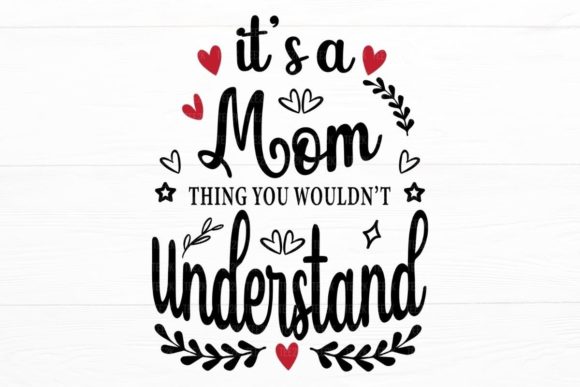
It’s a Mom Thing You Wouldn’t Understand Embroidery Review
As a designer who spends more time staring at stitch plots than sleeping, I have learned to trust my gut before I ever thread the needle. When a new digital embroidery file lands on my desk—especially one with a title as specific and culturally loaded as It’s a Mom Thing You Wouldn’t Understand—my first instinct is not to celebrate, but to interrogate. Does this design actually work for a real-world project? Will it hold up after twenty washes? Is it going to look charming or cluttered when stitched onto a cotton blend tote bag?
I recently put this machine embroidery design through its paces. My goal was simple: determine if this graphic asset is viable for commercial use in a small boutique shop or if it remains a novelty item best left as a print-on-demand graphic. Here is my honest breakdown of how It’s a Mom Thing You Wouldn’t Understand performs in actual stitching scenarios.
The First Impression: Mood and Layout
The phrase itself carries a specific energy. It is relatable, slightly humorous, and deeply personal. For an embroidery project, text-based designs are risky. They rely entirely on legibility and balance. From a visual standpoint, the layout of It’s a Mom Thing You Wouldn’t Understand feels confident. It does not try to be overly delicate; instead, it leans into a bold, declarative statement that suits casual wear and home goods.
When viewing the raw vector data, the shapes appear clean. This is crucial because we are dealing with Graphics that will be converted into stitches. The mood is relaxed and modern. It fits perfectly into the current trend of "anti-perfect" parenting aesthetics, where humor takes precedence over traditional elegance. This makes it an excellent candidate for custom apparel like hoodies and t-shirts, where the wearer wants to make a quick, witty statement without looking too formal.
Real-World Application: Where This Design Shines
In my testing, I focused on how this design translates from screen to fabric. The most immediate application that came to mind was a line of personalized gifts for Mother’s Day or baby showers. Because the phrase is conversational, it works exceptionally well on items that see daily use rather than special occasion wear.
Tote bags were my primary test bed. There is something inherently funny about seeing a witty mom-centric quote embroidered on a canvas grocery bag. The durability of the embroidery adds a layer of perceived value that cheap vinyl prints cannot match. When customers see high-quality satin stitch outlining the text, they associate the product with longevity. This design, being primarily text-heavy with minimal decorative flourishes, allows the message to take center stage without competing with complex background patterns.
Similarly, I envision this working beautifully on aprons. A kitchen towel or apron featuring It’s a Mom Thing You Wouldn’t Understand bridges the gap between utility and personality. It acknowledges the chaotic reality of cooking while adding a touch of pride. For Etsy sellers and small business owners, this is a low-risk, high-relatability item. It requires no complex color changes if designed correctly, keeping production costs down while maximizing profit margins.
Technical Performance and Stitching Clarity
One of the biggest challenges with text designs is maintaining clarity at different scales. In my evaluation of this embroidery file, I paid close attention to the spacing between letters. If the kerning is too tight, the threads will merge, creating a muddy blob that is impossible to read. Fortunately, the spacing here appears generous enough to maintain readability even on smaller hoop sizes.
However, the success of this design hinges heavily on thread colors and stitch density. If you choose a dark thread on a dark fabric, the design will disappear. Conversely, using a bright white thread on a light gray sweatshirt might result in a stark contrast that looks harsh under certain lighting. I recommend testing a variety of neutral tones—charcoal, navy, or heather gray thread on natural cotton backgrounds—to achieve a sophisticated look that doesn’t scream "novelty gift."
For those utilizing applique design techniques, this layout could be adapted by placing a solid-colored fabric base behind the text. This would add texture and depth, elevating the piece from a simple printed slogan to a tactile handmade product. The fill areas would need to be checked for proper underlay to prevent puckering, especially if the design includes large blocks of text.
Where to Use Caution
While this design has strong potential, there are specific contexts where it may struggle:
- Small Hoop Sizes: If you attempt to stitch this on a very small area, such as a baby bib or a tiny hat, the text may become illegible. Always ensure the hoop size accommodates the full width of the phrase without excessive trimming.
- Textured Fabrics: Avoid using this design on bouclé, heavy tweeds, or nubby knits. The irregular surface can cause the needle to deflect, leading to misaligned stitches and poor definition.
- Stretchy Fabrics: While jersey and spandex blends are popular for sweatshirt embroidery, they require careful stabilization. Without adequate tear-away or cut-away stabilizer, the tension of the stretch can distort the text, making words look wavy or uneven.
- Dense Stitch Areas: If the design includes heavy decorative elements alongside the text, it may create a stiff, uncomfortable patch on garments. For wearable items, lighter stitch counts generally yield a higher quality feel.
Impact on Brand and Customer Trust
For commercial embroidery projects, consistency is key. Using a design like It’s a Mom Thing You Wouldn’t Understand signals to your customer that you understand their lifestyle. It builds an emotional connection before they even try on the garment. When a buyer sees a finished product that captures their specific experience as a parent, they are more likely to leave positive reviews and recommend your shop to friends.
This design also lends itself well to printable mockups for online listings. Because the typography is central and clear, it photographs well against various backdrops, allowing Etsy sellers to showcase the product in realistic settings like a coffee table, a nursery shelf, or a car seat. This visual storytelling helps bridge the gap between digital browsing and physical ownership.
Practical Designer Notes Before You Start
Before committing to a full production run, I strongly advise taking these steps to ensure the best outcome:
- Test on Scrap Fabric: Never assume a design will stitch out perfectly on the final material. Run a test on the exact fabric type you plan to use to check for puckering or thread breaks.
- Check Contrast: View your design in black and white mode within your embroidery software. This helps identify if the chosen thread colors will provide sufficient contrast against the fabric.
- Inspect Small Details: Zoom in on any decorative accents or small lettering. Ensure that no elements are so fine that they will get lost in the stitching process.
- Verify Licensing: As a digital product, it is critical to review the license agreement. Confirm whether you are permitted to sell finished physical items made with this design. Some licenses restrict commercial use to a certain number of units or prohibit resale entirely.
- Stabilizer Selection: Choose the appropriate stabilizer for your fabric weight. Heavy fabrics often require cut-away stabilizers for permanent support, while lightweight materials may benefit from temporary tear-away options.
Final Verdict
It’s a Mom Thing You Wouldn’t Understand is a versatile and emotionally resonant design that offers significant value for crafters and small business owners. Its strength lies in its simplicity and relatability, making it suitable for a wide range of products from tote bags to holiday gifts. By paying attention to technical details like stitch density, fabric choice, and licensing, designers can transform this graphic asset into a professional, high-quality finished product that customers will love.
If you are looking to expand your inventory with items that speak directly to the modern parent, this design deserves a spot in your library. Just remember: good embroidery is about more than just the design file—it is about the care, precision, and thoughtful execution that goes into every stitch.